Before a Road Trip: What to Check About Carry Laws in Other States
Your permit doesn't automatically come with you. Here's what to look up before you pull out of the driveway.

Road trips are one of the best parts of life. Visiting the grandkids. Fishing a lake you've never seen. Finally taking the drive you've talked about for years.
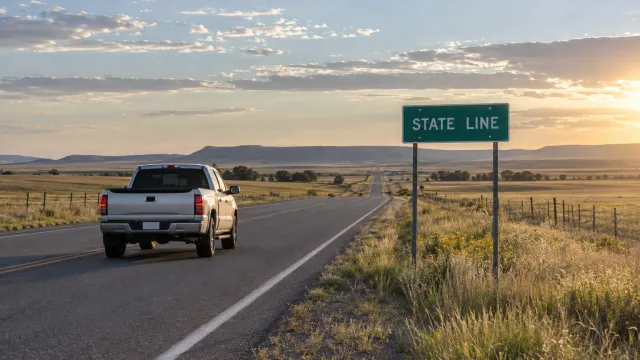
But if you carry, a road trip comes with homework. Your permit was issued by one state. The moment you cross into another, that state's laws apply to you. And they might be very different from what you're used to at home.
This isn't meant to scare you off. It's meant to help you plan. Here's what to check, state by state, before you go.
1. Map your route, including the states you're just passing through
Most people think about where they're going. Fewer think about where they're driving through. If your trip crosses four states, you need answers for all four, even if one of them is just a two-hour stretch of interstate and a gas stop.
Write the list down. Every state, in order. That's your checklist for the rest of this article.
2. Does each state honor your permit?
This is the big one. Some states honor permits from many other states. Some honor only a few. Some don't honor any out-of-state permits at all. (If this is new to you, start with our plain-English guide to reciprocity.)
Check each state's official source. That's usually the state police, the department of public safety, or the attorney general's office. Third-party maps and apps can be helpful for a quick look, but they can be out of date. The state's own website is the one that counts.
A few things to watch for:
- Conditions. Some states only honor permits held by people of a certain age, or only permits issued by the state where you actually live.
- Resident vs. non-resident permits. If you hold a non-resident permit, some states treat it differently. We explain that in resident vs. non-resident permits.
- Permitless carry. If your home state doesn't require a permit and you don't have one, don't assume that carries over. It often doesn't. See permit vs. permitless carry.
3. What are the rules once you're there?
Even when a state honors your permit, you generally have to follow that state's rules while you're in it. Not your home state's. This is where a lot of honest people get tripped up.
Look up:
- Off-limits places. Many states restrict carry in places like schools, courthouses, government buildings and some places that serve alcohol. The exact list varies a lot from state to state.
- Posted private property. In some states, a "no carry" sign on a business has the force of law. In others it doesn't. Know which kind of state you're in.
- Vehicle rules. States have different rules about how you can carry in a car or truck, especially if you step out and leave something behind.
- Equipment rules. Some states have rules about what you're allowed to carry, not just whether you can.
4. What happens if you get pulled over?
Traffic stops happen, especially on long drives. Some states require you to tell the officer right away that you're carrying. Others only require it if you're asked. Some have no requirement at all.
Know the rule for each state on your route. Whatever the rule is, the basics are the same everywhere: stay calm, keep your hands where the officer can see them, and follow instructions.
5. Stopping at parks, campgrounds and attractions
Plenty of road trips include a national park, a state park or a big attraction. Each one can have its own rules.
National parks generally follow the carry laws of the state they're in, but federal buildings inside a park, like visitor centers and ranger stations, are typically off limits. State parks, campgrounds and wildlife areas set their own rules, and they vary. Private attractions, stadiums and theme parks often ban carry entirely.
If your plans include any of these, look up the specific place before you go.
6. Plan for the places you can't carry
Sooner or later, you'll hit a place where you can't carry. Maybe a state on your route doesn't honor your permit. Maybe you're visiting a courthouse or a stadium. Think through what you'll do ahead of time, and make sure whatever you do complies with the law in that state. Rules on storing and transporting carry gear in a vehicle vary, so look them up rather than guessing.
7. Check again close to departure
Laws change. A state might update its reciprocity list or pass a new carry law between when you start planning and when you leave. Do a quick re-check of each state's official site in the week before your trip.
Quick road-trip checklist
- List every state on the route, including pass-through states
- Confirm each state honors your permit, and note any conditions
- Look up off-limits places and signage rules in each state
- Check vehicle carry rules and traffic-stop rules
- Check rules for any parks, campgrounds or attractions you'll visit
- Have a plan for places where you can't carry
- Re-check everything the week you leave
The bottom line
When you carry, the responsibility for knowing the law is on you, in every state you drive through. That's not a reason to stay home. It's a reason to spend an evening with a map and the right websites before you go.
Do the homework once, write down what you find, and enjoy the drive.
Note: This article is general information, not legal advice. Laws vary by state and change; check your state's official resources.